
 Membership
 Donate
 Shop
Shop
















Reframed
Mark Shambaugh and Mark Kozak / Telluride Science and Innovation Center
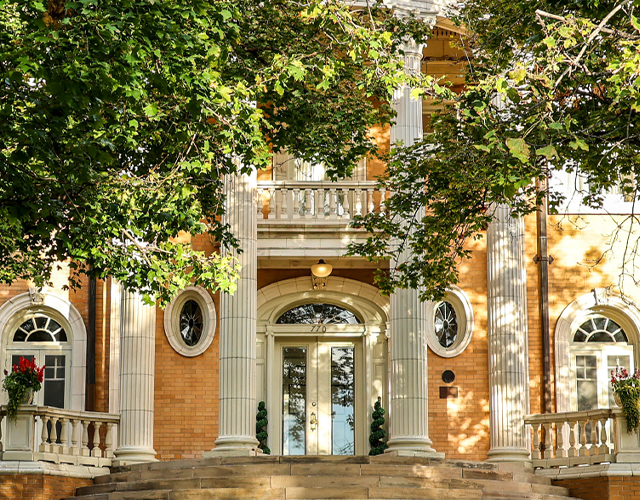
Built as a train depot in the 1890s the Telluride Science and Innovation Center has gone from brew-pub, to art school, to COVID-19 ward, and now hosts a cutting-edge science facility and event venue. Colorado’s State Historic Preservation Officer, Dawn DiPrince, invited Mark Kozak and Mark Shambaugh to discuss the recent renovation, and how adaptive reuse helped keep this badly-needed public event space and historic building from being developed into private condos. They discuss the specific magic the Telluride community brought to the project to life, the building’s place in the current science scene, and even share a ghost story. All this and more in an exciting and meaningful episode of reFRAMED.
Episode Transcript
Speaker 1 [00:00:00] Welcome to another edition of ReFramed, Preservation for a New Day, where beloved old spaces are reimagined. We take a deep dive into the preservation of an amazing historic space. What did it used to be, what is it now, and how did it happen? It's adaptive reuse and heritage for all, brought to you by History Colorado and hosted by me, Dawn DePrince, Colorado State Historic Preservation Officer. Well, I am excited to be here today with two Marks, Mark Kozak and Mark Shambaugh from the Telluride Science. Tellurides Science, the building is called Telluride Science and Innovation Center and this building has been on quite a journey, it sounds like. Originally built, I believe in 1891, is that right? And was moved, put back in place, and now has a new life doing amazing, really innovative stuff on the cutting edge of new technology. So which one of you would like to tell us a little bit about this building and the journey it has been on to get to today?
Speaker 2 [00:01:27] Well, um, this is Mark Kozak. I can start on that. So as you mentioned, it was built in 1891 and then it was owned and it was constructed by the Rio Grande Southern Railway, right? And so it was a connection. It played a very important role in the growth of Telluride because it was Telluride at the time or through the next really 60 years was exporting a lot of gold and silver and very precious metals out of here. And at that time, the town was going through a boom and it was growing a ton. The telegraph office was also here, so it was really in a very critical building for the whole town. Right. The Rio Grande Southern Railway went out of business, I believe, in 1952 or 56? 52. 52. Uh, then it just sat empty and sort of for the next 40 years, really just fell apart. You know, it would, it was starting to fall over and it was being held up with big braces on the inside of these. And so in 1990, the effort began to, they were redeveloping this neighborhood sort of along the San Miguel river here, and they picked up the building. And they put it on a new foundation in 1991, and it became San Juan Brew Pub, sort of its next iteration of its life. And then the owner rented it to, it became Harmon's restaurant, I think in like the late 90s? 90, mid 90s. The mid 90's. And then that was also a very popular place. And then it was transferred over to the art school, so AHA School for the Arts. And they owned it for about 12 years. And while it had been redone, the maintenance on it sort of kept getting worse and worse. And as you can imagine, as a non-profit art school, it's hard to fund, you know, a lot of improvements. And so we, Telluride Science, we've been around actually since 19... In 1984, we are an offshoot of the Aspen Center for Physics, and we became, in 1984, a new place for interdisciplinary collaboration. So our purpose is to advance scientific knowledge and bring together global thought leaders to address societal and planetary challenges. And every year we host close to 60 workshops, they're all invitation only, small intimate workshops and we impact about. 400 domestic and international institutions annually in terms of accelerating product research productivity and generating new ideas to really push the fields of biomedical science, material science, energy, quantum computing, climate and water, push all those fields forward. So one of the things that we like kind of metaphorically or symbolically about our project is that, you know. Telluride was really established itself as, you know, exporting all these precious metals out of here. And now, as corny as it sounds, we're exporting ideas out of there. So that's a well-said brief history.
Speaker 3 [00:05:00] Can I add one more historic comment as chairman of Hark and my love of history and one reason I got involved, I would have to tell them what Hark is. Uh, Hark, is the, uh, historic architecture review commission in charge of all the national historic landmark buildings in this town. But as Mark said, this transformation cannot be underestimated from hauling the precious metals out by burrow for two or three days to a short train ride. Cut their costs in half to down to Ridgeway and then Montrose for shipping made just an epic difference in 1891 and cut their cost in half. And it really changed the whole connection to the rest of the world for this town. And this is a national historic landmark building in its 146th year today. And despite band-aid fixes along the way, this was a complete transformation. And I'll rest with that.
Speaker 1 [00:05:56] Yeah, well, I mean, I'm so enamored with the idea of how much affection the community must have for this structure. That they keep re-imagining, you all keep reimagining its purpose and have not abandoned it, right? This idea that it must have a special meaning to continue to want to reuse it in all of these marvelous ways and have it be a part of the future. Can you speak to that? Like why this building for this purpose?
Speaker 2 [00:06:32] Yeah, you know, it's funny. This is a special building and special place. And so what happened, how we came about acquiring it was we were actually the most reoccurring renter of what's called the gallery room, which is the big open room on the west side of the building. And all our scientists would come meet there and they would love it. And, so, I knew that it was special in the hearts of scientists, and so that's kind of why. The AHA asked us if we wanted to purchase it from them. And one of the nice things is they needed a bigger facility. And so we were essentially able to rally the community around us purchasing the building because that purchase, all that funds also went to fund the new AHA school, which is also very dear to the hearts of the community. Now, also this building has been, because this room on the West side is one of the largest rooms. Actually in Telluride. It was always very important for, you know, nonprofit fundraisers, to memorial services, to, you know, graduation parties. And we made a promise to the community that when we purchased it, there were actually two developers waiting to turn it into condos. So we made a promise to the community that would stay accessible to the public. Well, one of the things when we first purchased it, we went under contract in 2017, but we had to wait till this new building for AHA was finished in town for them to move in. So it was actually 2020 when we actually purchased it. But we allowed it to be turned into the respiratory clinic for the med center during COVID because they were operating at a tents in the street. So it has seen a lot of different purposes. We are very proud to say that this building has allowed us to expand our programming by 21%, but also just in 2025, we hosted 89 nonprofit and community events here. So it's really been this great multipurpose community resource, not only for advancing science and technology globally. I honestly believe that it's one of the most powerful mechanisms that advancing science and technology because we're all about small. We believe that takes small groups to help people collaborate and share ideas and to trust each other. And it's incredibly productive. But also that it, you know, that it remains a community resource. And so it's been great. But it was at the brink.
Speaker 3 [00:09:15] Of not having that joyous future.
Speaker 1 [00:09:19] And I just really wanna like underline this thing that you just mentioned. So for two years, essentially, you turned this over to the community during the pandemic and allowed the structure to be used as a respiratory care facility because the hospital needed extra space, correct?
Speaker 2 [00:09:44] Yeah, so we're actually right next to the Med Center, so it was sort of perfect for them.
Speaker 1 [00:09:48] Yeah. Yeah. I mean, that's such a great like small town, you know, generosity story of people pulling together to solve the problems that just need to get solved. I think that's such a really great way to think about all of the many, many ways this building has served the community. I just appreciate that story very much.
Speaker 4 [00:10:11] Oh, thanks.
Speaker 1 [00:10:11] Yeah. And I keep thinking about the through line of this because, you know, we often hear from our colleagues who are still in the mining industry, the connection, even with those minerals to the kinds of technologies and innovations that you are working on today, the kinds. Transportation that this building represents, you know, as the connection to the outside world. It just feels like there's a lot of through lines between the history of nearly 150 years ago and the kinds of things that are happening in this building today.
Speaker 2 [00:10:52] Yeah. And actually, one of the cool things is we do a lot of work in materials here, basically at the molecular level. And we're hosting a workshop week in October on critical materials, which is very important for everything from our energy nationally to our national security to, you know, our devices and communication and everything. So we We're actually perfectly suited science-wise for this, because we blend science and physics and math and computer science and chemistry. And so we're excited that that actually has a nice tie back to the mining days, right? Where people are now working on solutions called like pure mining, where you're able to extract 99% of the core material and then have the waste be something that sequesters carbon without all the necessarily the acidic byproducts that damage the environment. So it's kind of cool.
Speaker 1 [00:12:03] Yeah, it's very cool. Fascinating. So I am curious about how you were able to pull off sort of the alchemy of this project. You know, this was a building in need of love. It, you know, you did not have to provide a foundation. That was something that was huge. Yeah, some of your predecessors were able to do. But when you took this building on. It still needed some significant rehabilitation. Oh.
Speaker 2 [00:12:39] Puns. We had to jack it up off the foundation to replace the sills. I mean, everything needed to be replaced. The electrical, the plumbing, we gutted it down to the studs, the roof needed to be replace. It really had a total transformation. And then we actually, architecturally, brought it, the main floor, back to sort of the way these depots were laid out where on one side, you really had sort of a public, you know, access to the train and the other side you had, you know, shipping, you know, side. So we actually opened up the building more, creating larger rooms where, and our office actually sits in where the office for the, the train station was, which is kind of cool where the little kick out is little conductor. Yeah.
Speaker 3 [00:13:36] But if you want to know more about project challenges, I could add in that when you said, oh, well, we didn't have to replace the foundation. Let me just share that as you probably know from other historic projects, we had to repair a lot of the foundation as Mark said, and then jack the whole building up. And of course, then we did that as part of the forensics. We found lots of underground surprises with not just buildings, but some structural that was structural in the building that had to be redone to make it habitable. And of course. You know, restrooms and technology and the first ever air conditioning for the scientists. But I can't emphasize how challenging it was to react quickly to some of the basement issues, structural issues, technology issues in a 140-year-old neglected historic landmark building. Rode it infested
Speaker 1 [00:14:27] Of course.
Speaker 3 [00:14:29] So I can talk a little bit more later about timing and the team, but I'll just I'll leave it with that on some of the challenges to construction, engineering and construction.
Speaker 1 [00:14:39] And you're near the river, right?
Speaker 3 [00:14:42] Right, which didn't impose even at the high runoff season, didn't really impose much. I mean, there've been times that it flooded nearby, but that wasn't part of a major challenge here.
Speaker 2 [00:14:53] But we did take that in consideration in the redesign in terms of, you know, how to replace pump out pumps and like ceiling the building and yeah, all that sort of stuff. What we put down on the bottom flooring, you know, we have wood on the main level, but down here in the basement area, we put a synthetic floor down.
Speaker 1 [00:15:18] What about funding for the project? How were you able to fund such a giant rehabilitation?
Speaker 2 [00:15:25] Yeah. So, you know, the funny thing is we just finished the capital campaign.
Speaker 1 [00:15:32] Oh, wow. Congratulations.
Speaker 2 [00:15:34] I know. So it was, uh, it was 13 and a half million, you know, to totally, to purchase and then totally overhaul everything and make it gorgeous. You know, a lot of it's kind of about telling a story, right? Because we came into this with no donor base. And so it was about bringing on, see people in the community onto our development committee and our board with a lot of. You put the great reputations and people who are respected and leveraging, building that network to essentially come up with different fundraising strategies to make it appealing. So it's a marathon, raising money for a project, but we just kept plugging away. We were fortunate to be able to take advantage of the historic tax credit and sell that and we were awarded that. In January, and we were able to sell it in February. So yeah, it worked out very well. We're very grateful for you guys, so thank you.
Speaker 1 [00:16:43] Yeah, that's excellent. So it sounds like mostly private donations and then with the help also of, was it a state or federal tax credit?
Speaker 2 [00:16:53] It was a state.
Speaker 1 [00:16:54] Excellent. Yeah, that is really great news.
Speaker 2 [00:16:59] Yeah, I mean, that provided us a significant amount of money to offset our things. But I think you just have to, we are also fortunate here in Telluride to have, for a lot of towns, it's way harder than it is for us, you know, we have a lot of people with a fair amount of capacity.
Speaker 4 [00:17:20] Mm-hmm
Speaker 2 [00:17:20] The challenge is, you know, to get people to give for something, you have to have a story that they feel emotionally connected to. And it takes time to build that connection with people and make them feel, have them feel a sense of ownership over what is happening and that they want to be a part of it. So yeah, I certainly learned a lot about fundraising during the process.
Speaker 1 [00:17:45] Yes. Yeah. What do you think created that emotional connection for people, that connection to science? I mean, you're a science guy.
Speaker 2 [00:17:56] It was sort of a two-stage approach. The first part was because we were in such a rush to purchase the building that we figured that we kind of emphasized the depot itself, the Telluride depot itself, and that this needed to be protected and preserved for the town. And so because it It takes more time. It takes, it takes years to develop, you know, these emotional connections. And we figured like, while we were doing this around something everybody knew being the Depot, you known, how important it was to the community. Let's focus on that part of the fundraising first. And during that period of time, they will start to understand how we impact the world as an organization. And one of the things that helped us with that is what has made Telluride Science successful over the past... 40 plus years is, well, it's not only a beautiful place, but we have a very friendly community. So people can come from all over the world and immediately feel at home and let their guard down and provide that mental space to think deeply about the challenges that they are working on. So every time I have a chance to talk to the public, I'm like, you are part of the success. So I want you to feel the sense of ownership that we are changing the world from telluride.
Speaker 1 [00:19:18] Yeah, that's great.
Speaker 3 [00:19:20] And certainly some donors who didn't even know what telluride science was.
Speaker 1 [00:19:24] Mm-hmm
Speaker 3 [00:19:24] 40 years. We got it completed on the day of their 40th anniversary of Zodiac Science. Loved the history of the place and restoring a national historic landmark, obviously. So it was a two-pronged motivation.
Speaker 1 [00:19:37] Yeah, and people wanting to be a part of it and feeling connected to something's so big and important, I'm sure.
Speaker 2 [00:19:43] Yeah, we couldn't have done this without Mark Shambaugh.
Speaker 1 [00:19:47] Yeah, yeah, a really great bridge builder, I can tell.
Speaker 2 [00:19:51] Yeah, but he is also brings construction expertise at engineering to this project. You know, and we had some great partners on this project, we utilize Finbro construction as our general contractor. They're really one of the larger local contractors here. They were fantastic to work with. We also worked with Salt Architects that had a very close connection to Finbro. He was originally part of Finbro And then also Tweed Interiors, a bunch of subcontractors, all local who, you know, I think it's important in terms of building the relationships also. So I played good cop and Mark played bad cop.
Speaker 1 [00:20:35] That's perfect!
Speaker 3 [00:20:38] Well, I'm just going to add on to that. When you think of the key partners, Salt Architects, Finbrough, um, I was on the science board and they got a quote for 250,000 hours to somebody to project manage it and they were fundraising inside, so I don't know if I'll just volunteer, but equally important was the preservation director, uh, the interior designer tweet and of course, all the donors, which Sally Puff Courtney, this was her seven, eight year dream. Spurred that from day one and Alpine Bank. But as Mark said, I've been in construction for 45 years and sole architecture in Finbro. This is a lesson learned for anybody doing a building. Everybody talks about teamwork, but if they've been there done it before, so the left-hand knows what the right-hand is doing versus the traditional construction, you've got finger-pointing between the architect engineer and the contractor on, oh no, this should be a change order. We didn't have any of those. Arguments and and I can tell you more detail if you want about the construction contract and some things to protect the owner but I can't emphasize emphasize that it was a motivated team and part of was based on the shared savings prospect of the contract which if you wanna know more I can talk about that kind of galvanized everybody with our every two-week meeting to come to the table with it was never over how could we save money especially towards the end when we were saving some money, and we decided, and then Mark said, okay. That we get some betterments to our scope and we were able to afford that. And I can share more of that if you wanna know more about construction later. But it was an unbelievable team effort and especially in a small town like this.
Speaker 2 [00:22:17] Yeah. And value engineering through the whole process, you know, very productively. So that was, yeah, how much did we save in value?
Speaker 3 [00:22:25] We we we we ended up on a five and a half million dollar construction project saving 131 000 dollars But what's behind the covers? Or behind the curtains as some people might say is we were able to add 800 000 of additional scope Wow, at the end like a completely new deck when we found out that the other one was crumbled All the acoustical walls and ceilings for the sun We tiled rather than just went brick some places on the patios. And I mean, we really raised the bar of, which is unusual at the end of the project, then you say, oh.
Speaker 1 [00:23:01] Totally.
Speaker 3 [00:23:03] You start out with here's what we need, but here's, what we want. And we budgeted for what we needed. Excuse me. Yeah, needed. And then we got some of these wants to be added at the end, which just added to the finished product that lure people in the 89 public or private rentings and rentals in one year. They have a first-class facility. That's not the 89.
Speaker 2 [00:23:28] Even the private commercial events that's like so we use like yeah so we use the private rentals like rehearsal dinners and welcome parties you know to help at like a premium rate to help subsidize a nonprofit rate so it's attainable and affordable for nonprofits but they do not reference the nonprofits
Speaker 1 [00:23:50] Yeah.
Speaker 2 [00:23:51] That's amazing. Yeah.
Speaker 1 [00:23:53] And those all sound like elements that also just improve the usability of the building for its primary purpose as well.
Speaker 2 [00:24:01] Yeah, you know, oh, you mean the finishes and things like that? Yeah, those finishes.
Speaker 1 [00:24:04] Yeah, those finishes. I mean, really, you know, as somebody who manages facilities, those things like better acoustics and, you know, tile, all of that, it just makes it easier to use and easier to maintain. I think those are really nice finishes.
Speaker 3 [00:24:19] And for some groups, and especially the scientists, there's no better technology for a building available. We put in the extreme top of the.
Speaker 1 [00:24:29] I think that sounds very exciting. I'm like a facilities nerd. I think those sound very exciting
Speaker 2 [00:24:34] There's a big joke amongst our longtime scientists because we used to rent the elementary school in the summer and they'd always say that, you know, you can't have a big ego when you're sitting in a little chair and they were like, Oh, you need to bring in little chairs.
Speaker 3 [00:24:52] And one of the lessons learned that Mark brought was at the school when they leased the school all these years which by the way only gave you about 70 days of rentals and now it's a full season opportunity to have world-class scientists come in was if somebody be running a lawnmower at the school or something the scientists would lose their concentration and complain and go in a small town you don't go to the principal you go right down to the superintendent of schools office and complain So yes, Mark was very sensitive about it and so down
Speaker 2 [00:25:17] Yeah, so we put a lot of sound attenuation materials in between the floors, walls, and things like that.
Speaker 1 [00:25:27] Yeah, I just think that is really good design, thoughtfulness, and you know, I can't help but think that all of the, you know ways in which you work as part of Telluride Science, these small collaborative teams probably also lent itself really well to this building process, right? The construction process, uh-huh.
Speaker 2 [00:25:55] We had a design committee as part of the board. And also just to the fact that we've been doing what we've doing for 40 plus years that we kind of know what we need and what we don't. So I mean, you always think that you get the design right from the beginning, but you do go through so many iterations and then we were close when we first started, but we still made a few. Changes and of course like when you're doing any construction projects, you don't want to do change orders, right?
Speaker 3 [00:26:26] Totally.
Speaker 2 [00:26:27] More money, so.
Speaker 3 [00:26:27] In any retrofit, especially 140-year-old building, there were, as I mentioned, several secrets. But the one secret that never came to pass is the rumors of Butch Cassidy, who had his first bank robbery here, and was rumored to have hidden stash some cash in the walls on his way out of town. And though we tore apart every wall, we never found it that we know.
Speaker 2 [00:26:49] Yeah, we we do actually have a good ghost story associated with that.
Speaker 1 [00:26:55] Oh yeah? Yeah, no fairy treasure, but you have a ghost? Yeah tell us about the ghost.
Speaker 2 [00:27:00] Well, we're so aha was very much aware. Aha School for the Arts, the previous was very much aware they were all like completely convinced and had seen the ghost down here, which was this old maintenance person dressed in it, you know, eighteen hundreds where, you know, looking around like he was a very friendly ghost. He was always checking on things. I like they would they would see him and I can't even imagine. But anyways, we haven't seen him since and we're thinking that he finally is comfortable with the state of the building.
Speaker 1 [00:27:34] Oh, yeah!
Speaker 2 [00:27:35] And maybe he really likes the kitchen.
Speaker 1 [00:27:37] Yes. He's been able to rest now. Yes. Yes
Speaker 3 [00:27:43] That is good news. Is there anything more about timeline or construction? Yeah, well I.
Speaker 1 [00:27:47] Yeah, well, I'm just I'm curious, like, what would you say your biggest challenge was in terms of your construction project?
Speaker 3 [00:27:54] Well, first of all, whenever you set a budget, before you've done all the forensics on a 140 year old building, that's a risky road to travel.
Speaker 1 [00:28:02] Exactly.
Speaker 3 [00:28:03] But the budget was the budget, including with the bank, Alpine Bank was another great partner. And they were an incredible partner.
Speaker 2 [00:28:11] Like they were so community oriented, they were just phenomenal.
Speaker 3 [00:28:15] That's great. But when you think about this, and then I'm going to answer directly some of the lessons learned here, and a couple of them we've touched on. But when Mark left the building in 20, Telluride Science, and then we signed a contract in 22, at the end of 22, we really started in March of 23 with about five or six months of demo. So the construction didn't get started in earnest till the summer of that summer 23. And then we finished July of 24. But oh, and by the way, we finished one day early. The reason that's important, sure we would have been like that been done sooner, but it was the 40th anniversary and Mark had all these scientists and people flying from all over the world.
Speaker 1 [00:28:58] Oh wow. Come in.
Speaker 3 [00:28:59] I mean, you talk about pressure, but we finished one day early, got our CO, and we talked about being under budget. But I think besides the team that we've talked about, other challenges were or other challenges were and lessons learned is if we could have and this almost never works. The only thing I could think to do different if we couldn't have done forensics before we even signed the contract, we probably could have established a budget where we didn't feel all this pressure, at least I felt pressure and Mark felt pressure. On the budget every two weeks and we met and got updates, but that's just not really feasible before you sign a contract with somebody to have them come in, you know, and just on their own. Particularly as a nonprofit, you know. Yeah. And so that was almost inevitable, but we spent almost five months in demo and forensics and smoked out pretty much all the secrets before we actually then started construction. But we structured the contract on a not to exceed basis and then it had a shared savings. 50-50 with the contractor but it had a cap on it. So, you know, how loose was that estimate? We don't know but we put a fixed cap of five percent as his share so he was incented to look for every nickel every week.
Speaker 4 [00:30:14] Mm-hmm
Speaker 3 [00:30:15] from the project manager down to the foreman to subs and Knowing that they could share in some of that success and yet The we were protected with his cap on the amount of savings they were allowed to make so it was win-win in the most
Speaker 1 [00:30:29] Yeah, that's super smart. I love that idea.
Speaker 3 [00:30:33] So that was just a little bit about timeline and construction and we'll leave that at that.
Speaker 1 [00:30:39] Yeah, I mean, that is the, you know, dilemma, I guess, with getting involved with a 140-year-old building is that there's so many unknowns, right, mysteries, and there could be a lot under the hood that you just don't know what you're getting into. So it sounds, though, as much as you could have your eyes wide open, you did. And you put in some pretty good strategies to prepare yourself for whatever may lie ahead. And then you met about it pretty regularly to make sure you weren't too off course. So it sounds like you planned for the inevitable mysteries as much as you could.
Speaker 3 [00:31:24] A little luck.
Speaker 1 [00:31:26] Yes, plus a little luck, yes.
Speaker 3 [00:31:28] But again, you know, we've talked team, team, team, but there was a great book, leadership book in the late 90s written by Jim Collins, who talked about leadership with respect to our project, I would say, you're looking at the team that we had. The book was all about getting the right people in the right seats on the bus, so we could all be galvanized driving down the road to success. And I think that really sums up. The team effort that we had here. He was at CU Business School, right? Yes.
Speaker 1 [00:32:00] Oh, that's great.
Speaker 3 [00:32:01] Yeah.
Speaker 1 [00:32:03] Yeah, you suited up the right team is what it sounds like. So those were your biggest challenges. What was your greatest joy?
Speaker 3 [00:32:10] Joy, Joy, uh, dedication day, building dedication day.
Speaker 2 [00:32:15] Yeah, I thought I did think the project was really fun. You know, I liked work, it was because of the group we had, you know, working together. And yes, I mean, Mark took so much pressure off of me, you know, in terms of the capacity of the construction itself, so I could stay focused on basically the design aspects and fundraising, you know, so that was very helpful.
Speaker 3 [00:32:43] And I think, I mean, I don't know if it's quite elevated to joy, but when we would have a success in theory, that's the thing about this team. At one point, everybody, whether it's Mark or his staff or myself or the architect or the general contractor, we had a problem. Different people, different times would come in with, well, what about this? What if solutions? And then we'd price them out and, you know, to some of these things that we found that like more structural steel, et cetera, that we couldn't have ever foreseen. And so I guess those were satisfactory moments. I don't know if it was elevated to joy or a moment of relief.
Speaker 2 [00:33:20] Yeah. I think the joy is actually now seeing how it's made the resource that is provided to the world of science and our scientists and also the Telluride community and that this is really a legacy project for us. Like we actually did something that made the world better. I feel so lucky to...
Speaker 3 [00:33:44] Well, and in a town with a rather loose, not always disciplined construction environment like a big city, this is just not typical to be done on time and under budget in this world here in the Rocky Mountains.
Speaker 1 [00:33:58] Yeah, well, and, you know, challenging climate construction seasons, I'm sure, as well. Yes.
Speaker 3 [00:34:04] That's why we did, Mark did, Mark made a good move early on, put the roof on before we even started a lot of the construction because it get it to beat the winter and we wouldn't have to be fussing with it ever again. And then have construction debris from the roof scared around. So that was very early. Yeah.
Speaker 2 [00:34:21] One of the things that we did with the new roof that was kind of fun was we, uh, we got this approved by the historical architectural review committee. We used a, um, it had cedar shakes on it originally, but of course you can't insure a building with cedar stakes anymore. And we're also close to the hillside here and we, we were able to find this, um synthetic composite, yeah, the synthetic cedar shake really. Looks just like, I mean, it's incredible and it has a 50 year lifespan. It's wildfire resistant. Yeah. And to be able to find these new materials that you can still keep it looking the way it's supposed to look.
Speaker 1 [00:35:01] Yeah. Maintain that character, but still protect from wildfire and all of those things is very smart. Well, and one of the things that I always like to think about is, and this could just be me being a romantic, but it feels like there's something, I always call it this high-altitude optimism. That seems perfect for science and innovation. And it feels like that is some of what you are tapping into with Telluride Science. Would you say that that is maybe true?
Speaker 2 [00:35:43] I think so. You know, I think also there's something about, um, the character, I think of Telluride too, you know, it was, it was a brutal place for so many years, you know, with the mining and everything. And then it's interesting. You look at the early sort of the ski bums and the hippies that moved to town in the seventies. And those people also, they also brought a can do Attitude also
Speaker 4 [00:36:13] Mm-hmm, mm-hmm.
Speaker 2 [00:36:14] And I think that persists here, the optimistic can do, make it something, you know, it's just been a, that's an, I think it's an organic thing and I think also it attracts part-time residents who can recognize that grittiness that you don't necessarily, that you might not see in another Ski Town.
Speaker 1 [00:36:38] Yeah, that's fascinating. I mean, there's something about this building, but it's like this building in this place that seems important for this endeavor, you know, these things all coming together to create what you all have created here.
Speaker 2 [00:36:55] Yeah, I feel very fortunate to have been a part of this. It's been, that's been fun, I think.
Speaker 3 [00:37:03] Can look back with a lot of pride and a lot recall of a lot of ups and downs through it. But whenever you cross the finish line successfully by every metric, and then this is just recognizing is the beginning because what Telluride science is bringing to the world from our little town is just beyond it being another project.
Speaker 1 [00:37:27] Yeah, this is great for Telluride, it's great for Colorado, but I think the impact is well beyond your community and our state. Yeah. Yeah, very incredible. Yeah, Very incredible. Well, we are just really grateful to hear about your project, about the work you all have done together and of course your time today in telling us all about it. We thank you very much.
Speaker 3 [00:37:52] Well, thanks for having us. Thank you. And to your listeners, come on up to Telluride and visit us.
Speaker 1 [00:37:59] Yes, I really, really want to come check this out.
Speaker 2 [00:38:03] Okay, see you soon.
Speaker 1 [00:38:05] Yeah, thank you. To see photos from this edition, visit historycolorado.org slash podcasts. Reframed, Preservation for a New Day is presented by History Colorado, offering 11 beautiful, inspiring museums and historic sites that ignite imagination of all ages. Join us to discover your past and build a better future for all people in Colorado. Home to a free public research center, Colorado's Office of Archeology and Historic Preservation, and the Colorado State Historical Fund, the nation's largest preservation fund of its kind. Learn more at historycolorado.org. This episode was produced by Sam Bach and Sarah Cappell, edited by Callie Mejia and directed by Julie Jackson of Julie Spear Productions and Truce Media Collective. Follow History Colorado on all social media platforms to stay in the know on all things history in Colorado.