
 Membership
 Donate
 Shop
Shop
















Reframed
Arica Andreatta / Walsenburg Mercantile
Join us on this episode of reFRAMED: Preservation for a New Day as we explore the incredible transformation of the historic Walsenburg Mercantile. Host Dawn DiPrince sits down with local entrepreneur Arica Andreatta to discuss how this century-old landmark was reimagined into a vibrant community hub featuring eighty local vendors, a bustling deli, and charming living spaces that is turning a familiar industrial building into a community gathering spot. Discover how this inspiring adaptive reuse project is fueling economic growth and reigniting deep-rooted hometown pride in Southern Colorado. It is a powerful story of how preserving our architectural past can build a brighter, more connected future for the entire community.
Episode Transcript
Speaker 1 [00:00:01] Welcome to another edition of ReFramed, Preservation for a New Day, where beloved old spaces are re-imagined. We take a deep dive into the preservation of an amazing historic space. What did it used to be? What is it now? And how did it happen? It's adaptive reuse and heritage for all, brought to you by History Colorado and hosted by me, Dawn DePrince, Colorado State Historic Preservation Officer. Well, I am delighted to be here today with Arica Andreatta from Walsenburg. I always love to talk to folks from Southern Colorado, my old stomping grounds. And I have been to Walsonburg Mercantile where Arica has worked her magic in rehabilitating this building. I have had the joy of being at Walsenburg Mercantile many times. It is a great place for breakfast burritos and hand pies. I will just reveal that is why I like to go. And all sorts of other really great crafts and local merchandise, but glad to have some time to chat with you today, Arica, about this really incredible preservation project. Can you tell us a little bit about Welsenberg Mercantile?
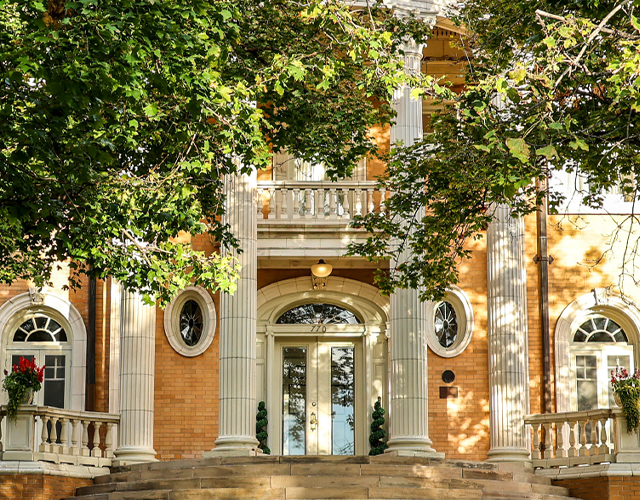
Speaker 2 [00:01:30] Yes, thank you so much for having me today. The Walsenburg Mercantile, the building itself was built in the early 1900s. It's 25,000 square feet brick building. I did find articles where it was said to be built in 18 days, which is pretty incredible for a building of that magnitude. And it was a pillar in our community. It's right off the main street, right across from our historic courthouse and park. And as a real estate agent, the building came for sale and I just knew it needed to go back to the community. So my husband and I purchased it and we remodeled it using a history Colorado tax credits. And we were able to give it back as a gift to the committee. So it is comprised of the first floor that has 80 local vendors. And these local vendors sell anything from metalwork, artwork. Honey, fresh farm eggs, you name it. It's kind of like an indoor farmer's market, so to speak. And those 80 local vendors are just glad to be a part of this project and have a little bit of a supplemental income to sell all of their beautiful wares. We have a Regalburg deli, it's a Regelburg deli, and that has a coffee, full coffee bar, bakery, breakfast, lunch, and dinner. And then next door to that in the same building with a pass through. Is the Stoke House and the Stokehouse is named after being able to stoke the coal fire because we're rich in coal mining history and able to stroke the the fire that was used for the coal trains. We have a seafood steakhouse restaurant there with events every night of the week. We have live music, poker tournaments, game nights, trivia, you name it. So every night of the week there's something exciting. And then we added a backyard patio so we can have dog friendly areas. And then, we have an outdoor arcade. On the second and third floor, we have units, Airbnb, or some people choose to live there long-term. We have 15 units and a rooftop lounge that overlooks the city and the beautiful Spanish peaks.
Speaker 1 [00:03:41] Yeah, incredible. I mean, so many things happening all at once. And really, the view of the Spanish peaks from the building is is very spectacular. You just absolutely know where you are when you were in that building. Part of what I find intriguing about doing preservation projects in smaller towns is that they often need to do a lot of work. The building it makes sense for the building to have multiple purposes and you know you are very entrepreneurial and have thought of many different things to put in the in the building you know a restaurant live entertainment crafts airbnb how did you come up with the right mix of business opportunities to go into the space.
Speaker 2 [00:04:39] Sure. For four years, I served as our Weirfano County Commissioner. So as a County Commissioner, I learned a lot about economic development and tourism. And so you really have to, in small rural Colorado communities, you have to do what's best for your economy, and you have to do anything you can to get tourists to stop. And so the few things that we identified is that we needed things for our locals to do. Items for travelers to want to stop and to stay. We needed housing, whether it was short-term or long-term, and then we needed to create jobs. And we also needed to have some consistent and affordable food for our citizens. It's important because many of the restaurants aren't open for breakfast, lunch, or dinner. They're not open certain days of the week. So we made a promise to our community that we would be open. Early morning, you know, seven o'clock in the morning and we'd stay open for a late night menu and that would be consistent seven days a week, but it would be both affordable and healthy and convenient. So that's really what we were looking for was to help develop the economy, create jobs, create housing, create an environment where we could get our community back. You know, COVID hit everyone hard, but it really hit our community. And so we just wanted to give gathering places where we can come back as a community. Give us safe space for our teens and our local kids. We have like groups that gather such as a ladies group of quilters. We have just different things going on all the time for breakfast, lunch and dinner, but it's definitely a place where the community can come back together and be proud.
Speaker 1 [00:06:20] Yeah, you know, I am thinking about when you talk about that pride, is putting all of that in a historic structure that the community has long known, is that part of the mix? Is that why you selected a historic structure for developing this business plan?
Speaker 2 [00:06:40] Yes, absolutely. So many people remember it as a band hall, which was nice to bring back the music aspect. And then it became a place where they made fireman's coats. And so we've had a lot of the employees of those organizations that have come back to look at the building and how it's changed. But I think it's really neat that we've gone from creating fireman coats, you know, sewing them to having ladies gather with their their quotes.
Speaker 1 [00:07:10] Tell me more about this making a fireman's coats. I don't know.
Speaker 2 [00:07:14] Know that story. It was like a factory. So it was a factory and it was full of machines and people that were sewing so they were actually making the firemen equipment. So they would sew it with their industrial machines but also by hand and make that in bulk. It wasn't manufacturing for firemen uniforms. And then in the basement there was a fireproof room where they would to actually go downstairs and test it. So we. We still have that downstairs in the basement as well.
Speaker 1 [00:07:46] Oh, wow. What years did that operation exist? It was there for quite a while.
Speaker 2 [00:07:51] While and I think it was basically, oh gosh, testing my memory, I'd have to look that up, but I think like in the 70s, 80s, 90s probably.
Speaker 1 [00:08:02] Yeah, when a lot of that kind of manufacturing, you know, left the U.S. Would you say that's probably when it left? Yeah, I would. Yeah. And then it became.
Speaker 2 [00:08:12] Like a telecommunication where they were doing things in the nineties with telecommunications. After the firemen.
Speaker 1 [00:08:21] Interesting. So, I mean, in many ways, this building could chart the different economic ups and downs of the nation in some respects, probably in the same way, you know, Walsenburg and Forfano County could as well, as you think about coal and you think about rail. You think about this kind of manufacturing and telecom. And now you have this whole other business model. Yes, and it's a very.
Speaker 2 [00:08:56] Back to the roots, you know, the train tracks still exist. They go right next to the building and they used to offload all the products in the early 1900s, like your big bulk rosemary, your beef, and then this was like a mercantile, which would have been like a big box store for all the local mining camps and the local grocery stores in town. And so we really wanted to bring that back to its full circle. My husband's grandfather actually, they came from Italy and they settled in the area and they had a butcher shop and they used to receive a lot of their goods for their local grocery store from this building. And so we do have a farm to table beef. We have Andreatta to beef that is a homegrown that served with all of our hamburgers. And then you can also get an Andreatta to Beef steak on the menu as well as purchasing it out of the deli cooler if you wanna take it home and cook them yourself.
Speaker 1 [00:09:54] Wow. I'm always struck by all of the different ways you can do preservation work. You know, there's this bricks and mortar preservation, which is certainly the work that you all have done with the building. But you are also talking about a different kind of preservation, you know, this preservation of foodways and preservation of different kinds of economic practices as well.
Speaker 2 [00:10:21] Yes, our community is deeply rooted in its history and so we wanted to bring that back to the forefront in any way that we could.
Speaker 1 [00:10:29] What would you say? You're very knowledgeable about economic development and the needs of your community. Why would you say that is a healthy approach to economic development in rural places? I think Colorado
Speaker 2 [00:10:44] Colorado is fortunate to have tourism, but I do believe that Southern Colorado is the last undiscovered part of Colorado. And there, fortunately for Wherefano County, we have highways that run through the downtown corridor. And then you literally have to hang a right to go to Highway 160. And Highway 160 is a very busy highway. It's the gateway to the National Sand Dunes. To Pagosa, Durango, to the Four Corners. And so it's a very busy highway going East and West and Wherefano County has previously had things in the town that allowed tourists to wanna stop. And that kind of fizzled away as some of our industries left. So it's really big push for our community to encourage these people who have always passed by or passing by for the first time to stop and explore. And it's working to see all the tourists that are stopping and exploring and then deciding to stay, spend some time in our community. It's an integral piece of your economic development and your tourism and we're so glad to be a small part of that and to watch all these other businesses take off. It's a team effort, it's a collaborative and I'm glad to say that it's work.
Speaker 1 [00:12:07] Yeah well and it sounds like you have provided a real hub for many different kinds of entrepreneurial efforts. You've got I think you said 80 you know small local vendors who participate and as well as you know opportunities for performers and other kinds of artisans to connect with you all. Yeah, we're really hoping, um.
Speaker 2 [00:12:37] This will be a business incubator for those local vendors and it's already started to take off. Gub Gub's Pizza, for example, Pizza and Ice Cream, they had plans to open and restore an old, I think it's 50s or 60s gas station on the corner of 7th and Main, but they had that under construction. So we offered them a space inside the mercantile to get their start. And their business model quickly took off and now they are on that corner and it's really neat. I don't know if you've ever been to Disneyland, but it really reminds me of Cars Land where you have all your old gas station items and they've done a great job. So we can't take credit for that, but we can say that we loved to collaborate with them while they had a little bit of time in their schedule while they were under construction. But similar to that, we hope that other some of these 80 local vendors find that they do so well in this store that they can go open up their own storefront on our main street corridor. And that's how we hope and plan to incubate some of those businesses.
Speaker 1 [00:13:41] Yeah, that's incredible. Can you share a little bit about the housing aspect of your operation?
Speaker 2 [00:13:48] Sure, so we have a total of 20 units and the design was to have it similar to like an Airbnb or a hotel where people would come in and stay in the community for a night and then maybe go explore the downtown and you know share the wealth with some of their tax dollars by eating and dining and exploring but then we also saw the need for housing. So we do offer. Um nightly, monthly, or annually, uh you can rent one of the one of the units and it's it's been really neat we're about 50-50 a long-term short-term now and the long- term guests are just thoroughly enjoying it kind of like a live workplace space that you see in in the city but you don't necessarily see in rural Colorado
Speaker 1 [00:14:37] Yeah, and that you've just built some real flexibility into your model to meet whatever the needs might be for the moment, it sounds like. And we'll continue to adapt.
Speaker 2 [00:14:48] So it's important in any business that you adapt to the need and especially when you're being creative and in a rural part of Colorado, you just have to adapt and evolve.
Speaker 1 [00:15:00] Yeah, yeah. And you know, I know just in chatting with you prior that this endeavor was not without its challenges. Do you want to share some of your challenges that you had getting it to this stage, which sounds like it's humming along right now, but certainly yeah you you've had some along the way.
Speaker 2 [00:15:22] Absolutely. I think anytime that you're kind of pioneering a new project in a community doesn't that hasn't had things like that it's going to be a challenge. So we ran into challenges with zoning because the zoning rules and regulations are 50 to 100 years old and what exactly does it mean? And so navigating that with the the town, the city of Walsamirk I should say, that was a challenge. Understanding that you sometimes have some old guards that don't want communities to change and they don't see the vision and they just want it the way it is, but need to understand that when you're sitting on a city council that you need to do what's in the best interest for the citizens as a whole. So we had some challenging city council members. But our community just came together and worked together, fought together, pushed for what we all wanted, and we were able to make that happen. So that was an exciting feat to get that up and running. And then we partnered with the state of Colorado to use some of these tax incentives in order to make this project work, because it was much greater and much above my husband and I. Just as private investors to try to figure out how to have the appropriate capital stack to make this work. So we worked again with History of Colorado to have tax credits that we can utilize to pour back into the business. And then given the state of Colorado and their budget, they decided to, after the project was done. Um not allow what they called overruns and so our funding what we anticipated receiving back from the state was essentially cut in half and so that was a big challenge for a small private investor to find that out after the project was complete so we're just doing our best to navigate those things and to make up that deficit and hoping that that doesn't happen to future projects because it was it was a Big hurdle for us to overcome and it's gonna set us back many years
Speaker 1 [00:17:33] Yeah, a big shift in how you had planned for the project and a big shift in, how the state was managing the rules. Yeah, sure. I understand.
Speaker 2 [00:17:44] You know, especially in government, the reason behind it, but I think it was just unfortunate timing for us. Yeah, for sure.
Speaker 1 [00:17:54] And, you know, it sounds like you're still grappling with that shift in the rules, and you will be for some time. Yes, I would think so. I don't know how long it'll take to over-
Speaker 2 [00:18:09] but one thing about us and my husband and I both agree, we are natives to the area. My husband's fourth generation to work in O County. I have roots dating back three generations and we just want what's best for our communities. So we aren't those that will give up easily or not continue to fight. And so we will figure out a way to make it work.
Speaker 1 [00:18:34] Yeah, you know, I just am always impressed when I have the opportunity to chat with you, Arica, because this is often what you get a sense of what it looks like for somebody who's super resourceful, but also really loves where they live and is investing in that place. Right? This isn't just anywhere. This isn t just about getting a project done. This is about investing in the place that you live and the place you love, and doing right by the community where you exist. It's always very impressive to see. So I appreciate that about you.
Speaker 2 [00:19:18] And that is why this was so important for us, because we are from here, because we have both enjoyed our upbringing here and because industries have come and gone and the dynamics of our community have changed that this was absolutely a passion project. It was our contribution back to our community in so many different facets, because we care and because we have some of the best people in the world, You know, salt of the earth and our community deserves it.
Speaker 1 [00:19:48] Yeah, I think when I was there for an event, it was maybe the same weekend as homecoming weekend, and your son is on the football team. And that just speaks to that, you know, good, old AmArican small town connection that sometimes can get lost in bigger places, but still seems to exist in in Walsenburg. And it really seems like businesses and families like you continue to nurture that and make sure that it exists for future generations. Yes, you have to.
Speaker 2 [00:20:29] That's what community is all about, especially in rural Colorado.
Speaker 1 [00:20:33] Yeah, well, I think preservation projects like this make sure that, you know, number one, that we are bringing, you know, I always say you don't have to start from scratch to build the future. And I think it's really important to bring these kinds of buildings that have had such an important legacy already in a community into the future, and that is really what you and your family have done with Walsenburg, Mercantile, and then you bring all of these other businesses along with it. Absolutely.
Speaker 2 [00:21:10] From the real estate standpoint, I think it's important for people to look at the cost to remodel versus the cost of build new. And I would assume that it's true for us and it's through for others in the state that this was much more affordable to renovate an existing building than it was to build something brand new. And then it is preserving the building for its history and for many years to come.
Speaker 1 [00:21:37] Yeah, was building in pretty decent shape or did you have to do a lot of work to it?
Speaker 2 [00:21:43] The exterior was great. The interior was just very open. So it made for a nice clean canvas. So we didn't have to do much to the exterior at all. Of course we did to the roof, but other than that, it's nice to see a big, beautiful building that's preserved on the outside and then open slate on the inside.
Speaker 1 [00:22:01] Yeah, and it sounds like a super amazing basement, industrial fireproof basement.
Speaker 2 [00:22:08] Yeah, it's very neat. There's this history everywhere you look. We have one of the oldest working elevators in the state of Colorado and a technician said he wouldn't be surprised if it was one of oldest working in the nation because he's worked on them from all over. Just every door, every door knob, every aspect of it is its original and you can see dates, you know, 1904, 1919, where it came from and it's just pretty neat to walk around. It's a work of art.
Speaker 1 [00:22:39] Yeah, I'll say. What would you say is the thing that you are the most proud of with this project?
Speaker 2 [00:22:48] I think just the amount of community involvement and support that is what we did this project for. And it's every time you go in the building, people are laughing and they're dancing and they are receiving those supplemental income checks from the selling their wares. So just giving it back to the community and seeing how much the community loves and supports it. That's what it was built for and that's what makes it all worthwhile. But for me personally, just allowing my children to see this project from start to finish. They were very involved, you know, we sat in this big 25,000 square foot empty warehouse and did a lot of dreaming. And I had the original note where they brainstormed exactly what they wanted and looking back at it today, which would be, we purchased it in 2021 and now it's 2026. So looking back five years, everything that they had dreamed really came to reality. So. Allowing young entrepreneurs to be a part of that and see how it's helped shape them and mold them into big dreamers. That's the important part for me personally, but first and foremost is just what it means to the community, because that's what we're here for and that's why we did it with the intention of giving back to the Community.
Speaker 1 [00:24:02] Yeah, well, and I could tell when I was there and saw your family that your kiddos are very proud of their mom too. They are.
Speaker 2 [00:24:14] They put a lot of hard work and effort into this project.
Speaker 1 [00:24:18] Yeah, lots of sweat equity from all of you. Yeah, well, really impressive, Arica. And I am going to be headed down that direction in the near future, so I'm looking forward to some more hand pies and homemade burritos. But also, yes, I maybe need to venture into these locally-grown, locally-raised hamburgers as well, so. Yes, you'll enjoy them, you won't find anything like them.
Speaker 2 [00:24:48] Mm. Mm.
Speaker 1 [00:24:50] Yes, really great work and Walsenburg deserves all of the love and appreciate you and your family doing so much with this building to give Walsonburg all of that love.
Speaker 2 [00:25:05] Well, thank you. It's a special place.
Speaker 1 [00:25:07] Yeah, thanks so much. Yes, thank you. To see photos from this edition, visit historycolorado.org slash podcasts. ReFramed, Preservation for a New Day is presented by History Colorado, offering 11 beautiful, inspiring museums and historic sites that ignite imagination of all ages. Join us to discover your past and build a better future for all people in Colorado. Home to a free public research center, Colorado's Office of Archeology and Historic Preservation, and the Colorado State Historical Fund, the nation's largest preservation fund of its kind. Learn more at historycolorado.org. This episode was produced by Sam Bach and Sarah Cappell, edited by Callie Mejia and directed by Julie Jackson of Julie Spear Productions and Truce Media Collective. Follow History Colorado on all social media platforms to stay in the know on all things history in Colorado.