
 Membership
 Donate
 Shop
Shop


















Panthers and Pigs Go to College
In the wake of the Civil Rights Act, Black Coloradans faced a paradox—protection or harassment—when it came to interactions with the police.
Editor’s Note: This article contains racist language quoted directly from historical sources. We chose to print the slur in full as part of our ongoing commitment to fully and honestly confronting systems of discrimination, dehumanization, and violence that have long been a part of Black Coloradans’ lived experiences.
In the autumn of 1968, two Boulder police officers approached Carol Cunningham, a Black University of Colorado Boulder undergraduate, and a friend referred to as “Pimp.” The officers shouted at the two men: “Hey you niggers—Stop!” Once they had stopped, one of the officers called on the two to remain still. The other repeatedly hit each of them with a billy club, making it all but impossible to stay frozen. Cunningham, in a feature article in the University’s Afro-American Student Association newsletter, Sounds of Blackness, described the stop, along with its effect on him and Pimp. Written as much as a literary essay as a factual account of police harassment, Cunningham reflected on the physical and emotional toll of this stop, writing “we had heard stories of people being harassed by the pigs but they were supposed to be the protectors of our people.”
Cunningham’s refrain reflected the paradox between protection and harassment the police presented to some Black Coloradans. Moreover, his and Pimp’s experience occurred at a moment of crisis for the Civil Rights Movement nationwide. The Rev. Dr. Martin Luther King Jr. was assassinated on April 8, 1968, about eight months prior to the publication of this edition of Sounds of Blackness. In the aftermath of King’s murder, African Americans across the country took to the streets. They were enraged at the murder of this icon of racial justice and at the slow progress of economic and legal change following the passing of the Civil Rights Act of 1964 and the Voting Rights Act of 1965. Urban police departments, white business owners, and Black activists clashed, especially in cities like Detroit and Newark, which experienced major riots both in the summer of 1967 and in the days following King’s assassination.
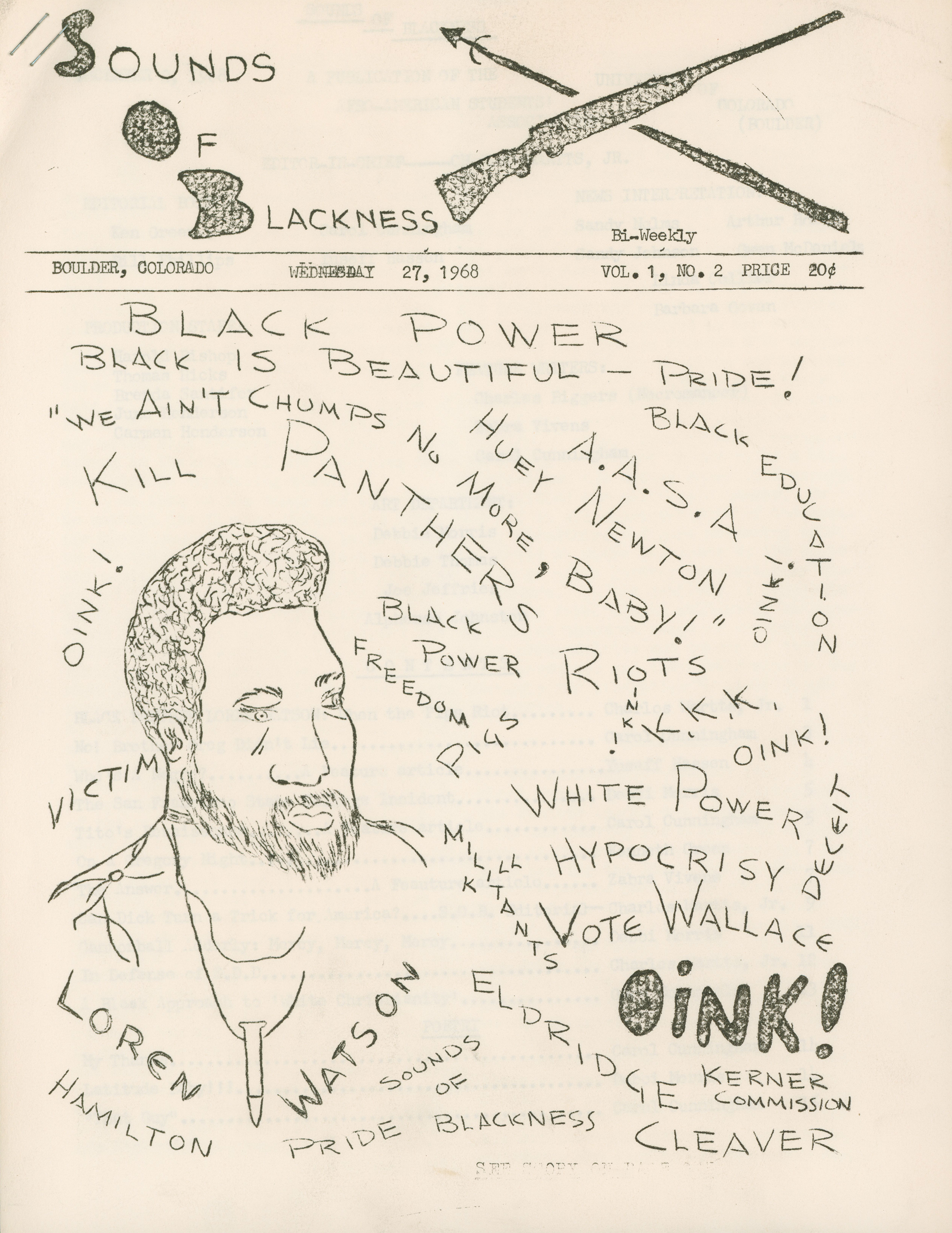
Cover of the second edition of Sounds of Blackness, the newspaper printed by CU Boulder’s Afro-American Student Association.
Black Coloradans experienced complex interactions with the police after King’s assassination. This was particularly pronounced for those in the Denver metro area and associated with more radical organizations fighting for Black freedom. Black activists viewed these interactions as part of a widespread campaign of police harassment ranging from beatings to unjust stops to irregular exchanges with campus police. At the same time, however, Black Coloradans saw their social, judicial, and political rights expand.
These contradictions are perhaps best embodied by the simultaneous increase of Black university students and Black prisoners in the state. The process of racial integration sometimes led to discriminatory reactions, which included the use of slurs to describe Black university students and the harassment of a Black boy on his way home from school, as Black Coloradans increasingly moved into previously white-only or white-dominated domains. Police actions—including arrests and alleged beatings—attempted to respond to the challenges posed by integration, typically in favor of long-held norms of social segregation, before it sparked into more radical action. These contradictions, frictions, and sparks expose some of the gaps between the legal revolution of the Civil Rights Movement and the local fight for equality in Colorado.
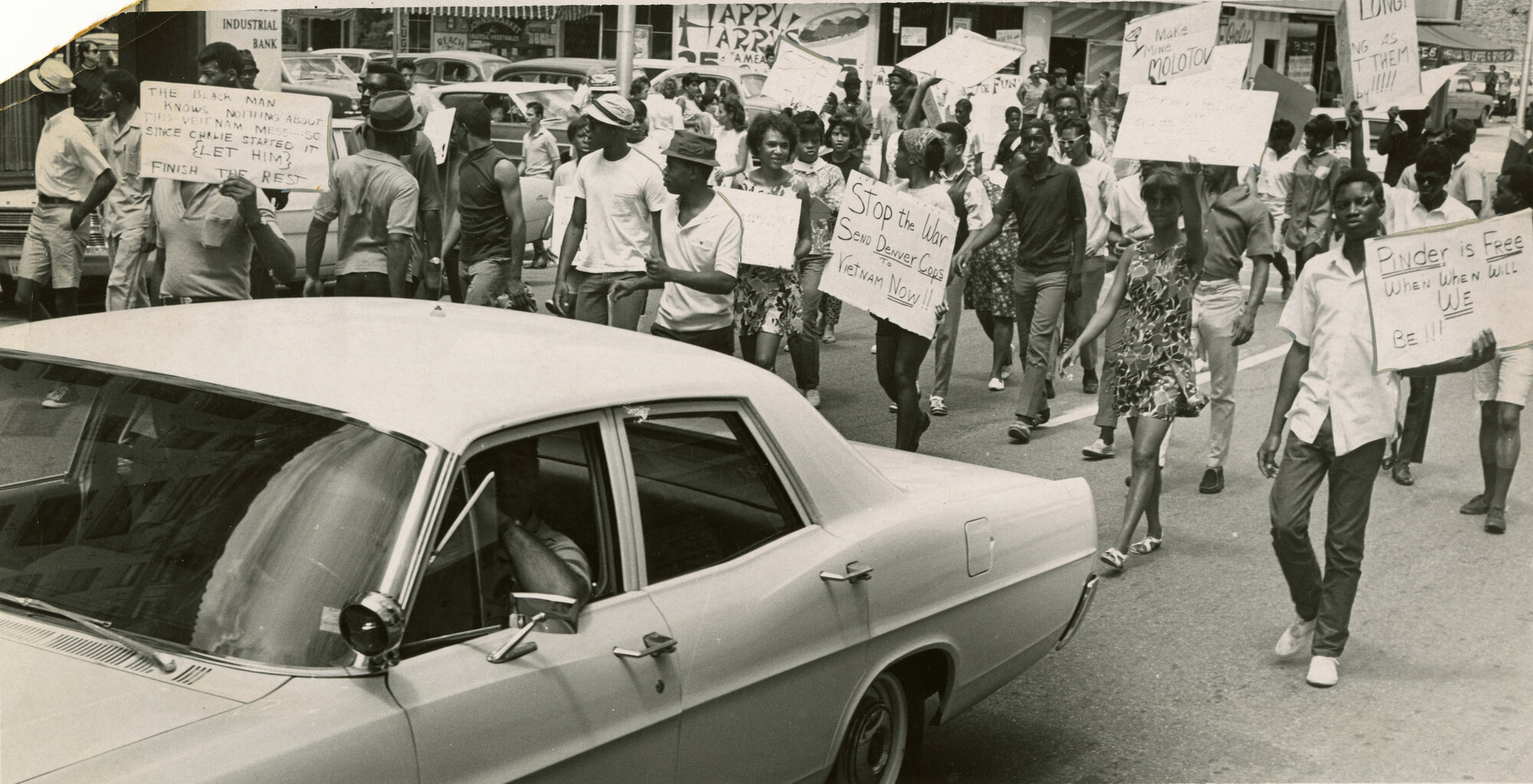
Denver protestors, the majority of them Black Denverites, marching towards the city’s police headquarters to protest both police actions and the Vietnam War. Photo taken for the Rocky Mountain News, 22 July 1967.
Black Students in Boulder
CU Boulder started Educational Opportunity Programs (EOPs) in 1968, likely in response to King’s assassination and the resulting upheaval. EOPs were a set of programs designed to increase and support the enrollment of Black, Hispanic, and Native American students, foreshadowing a nationwide legal system of affirmative action at universities. For Cunningham and other Black students at CU, the Black Educational Program (BEP), run initially by former CU physics graduate student Serge Paul-Emile, provided academic advising, culturally supportive events, and guidance on finding affordable and racially supportive housing in Boulder. Many Black high schoolers had come to CU from racially segregated high schools. In Colorado, the 1973 Supreme Court case Keyes v. School District No. 1, Denver recognized that the social (de facto) segregation of Denver Public Schools harmed Black students. In these segregated schools, Black students often received inadequate and limited college preparation. To better support these students, Paul-Emile advocated the creation of BEP summer courses. One of the courses presented Black students with culturally relevant coursework through a class called “Black Contemporary Issues,” intended to ease their transition from largely Black high schools to a predominantly white university setting. In addition, CU offered courses to help bring structurally disadvantaged Black students up to college level in academic fundamentals like math, English, and communication.
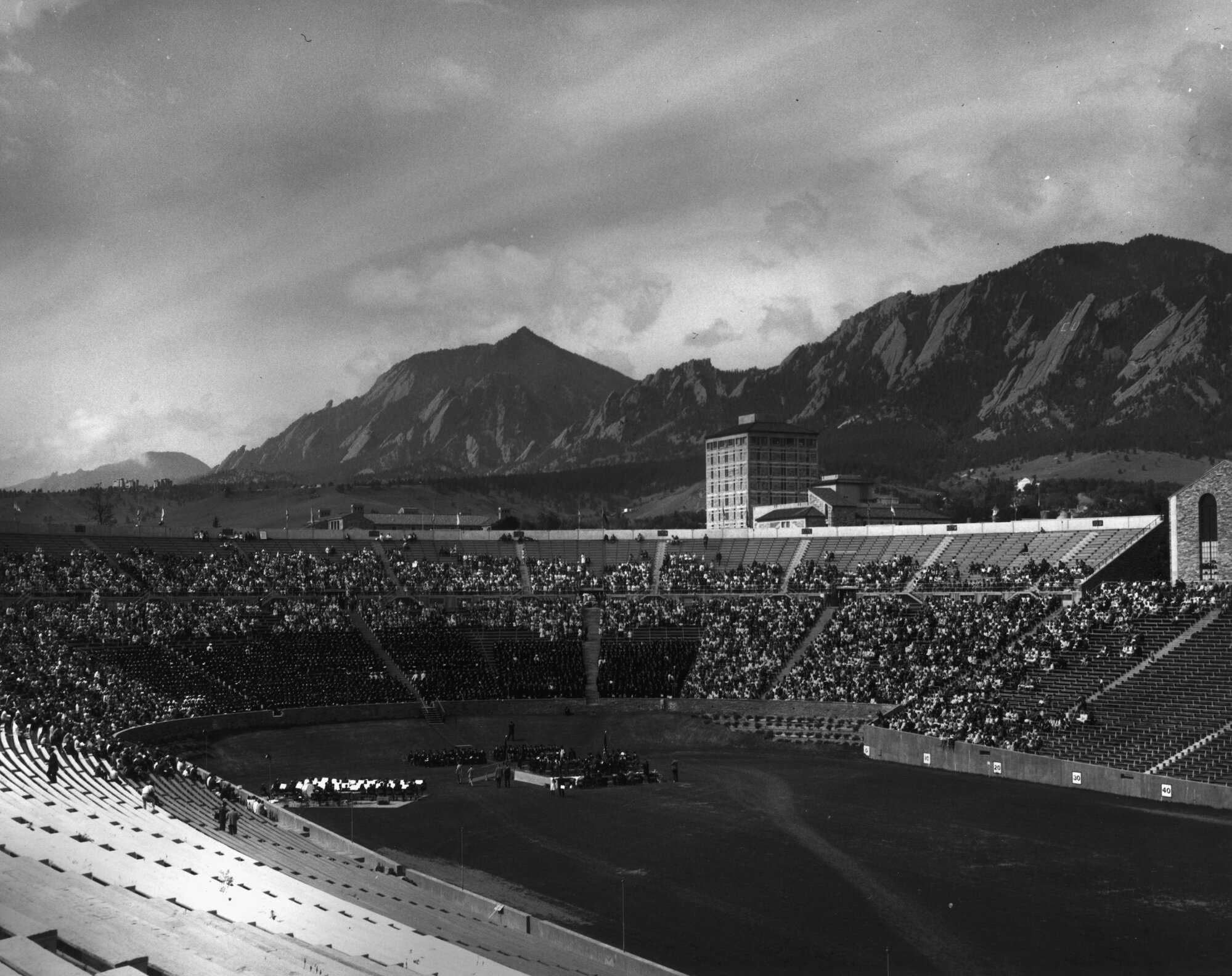
The 1968 graduation ceremony at CU Boulder.
Even with this significant financial and infrastructural push to support Black students from CU’s administration, Cunningham’s experience makes clear that some Black students did not always feel welcome in the Boulder community. The late 1960s and early 1970s saw significant tumult at universities nationwide arising from issues of racial and social justice. In Colorado alone, Colorado State University, forty miles north of Boulder in Fort Collins, saw Black students and their allies protest what they viewed as anti-Black racism by the Mormon Church during a February, 1970 CSU vs. BYU men’s basketball game. Eyewitnesses reported that during the protest, some students threw Molotov cocktails on the court. Unlike Colorado State, CU never experienced a singular “race riot” of anything approaching this scale during this turbulent time on campuses. Yet race still proved a flashpoint at CU in two smaller-scale incidents in the summer of 1969, alongside Cunningham and Pimp’s experience the previous fall.
In one instance, white Slavic and Eastern languages graduate student Cindy S.A.M. Caine denounced her harassment by “one of the summer ‘ghetto students’” one evening while living at Libby Hall, a dorm near the center of campus. In the lobby of her dorm, Caine was allegedly chased by a drunken youth bearing a knife who pounded on doors and shouted “that he wanted to ‘get to’ me.” Eventually “this ghetto boy,” a BEP student, was apprehended by the campus police. Caine reported this incident in a letter to Dan Daniels, the Residence Halls programming coordinator, complaining broadly about her summer living conditions, with this event at the center of her concerns. Caine’s language, especially her repeated use of “ghetto,” is the most revealing moment of this event. While the reported actions of this unnamed Black BEP student may well have been an isolated incident that does not necessarily illuminate anything unique about the process of integration at CU, Caine’s regular use of the racialized epithet of “ghetto” to describe a fellow student demonstrates some of the friction that newly enrolled Black undergraduates faced during a moment of a growing and increasingly visible Black presence on CU’s campus.
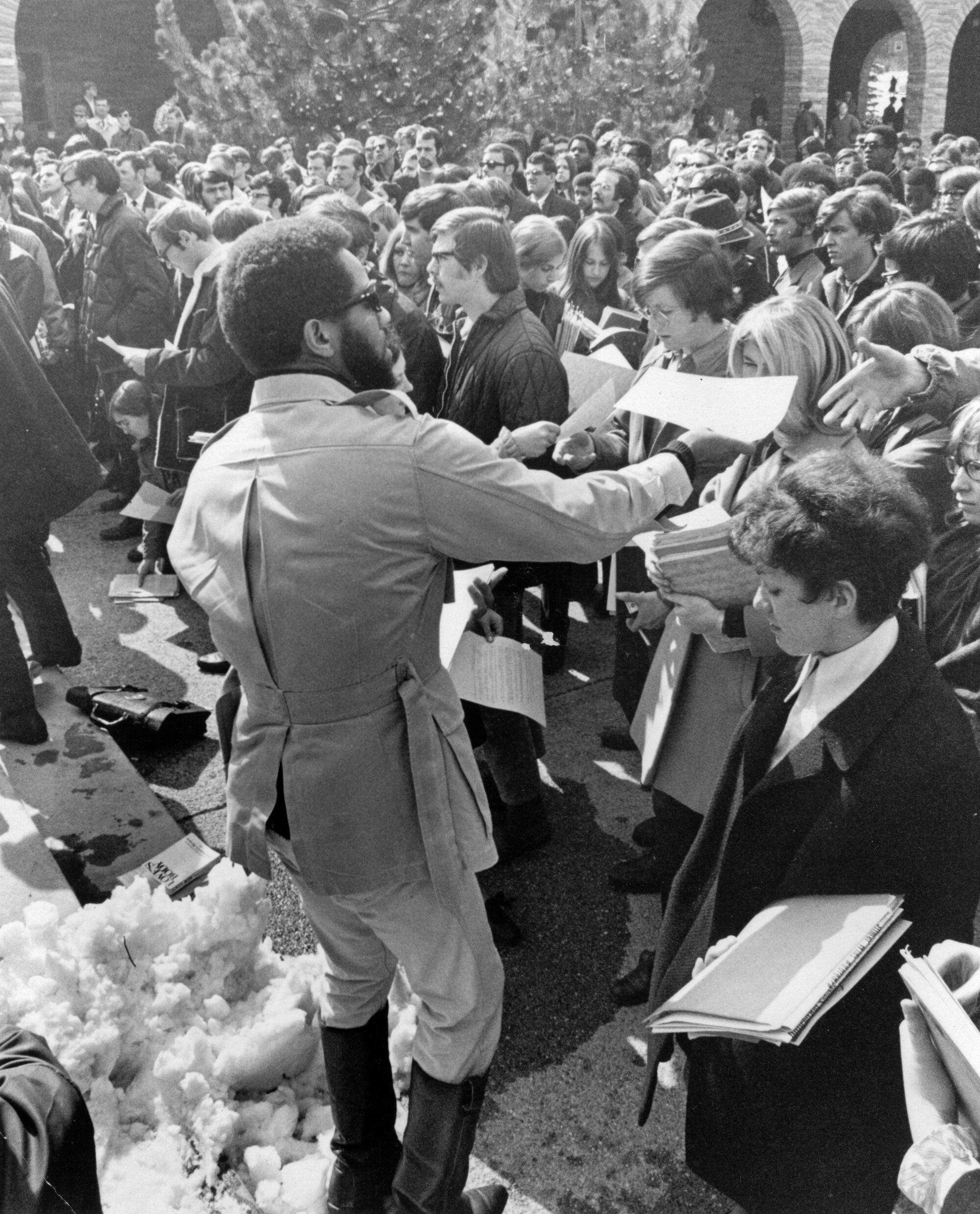
Lauren R. Watson handing out flyers to a crowd at the University of Colorado at Boulder on March 6, 1969.
Campus police reports, saved in a “Student Unrest” file in CU’s institutional archive, indicate some of the additional difficulties Black students faced at the University in the late 1960s. At 2:00 A.M. on Sunday, June 22, 1969, City of Boulder Police requested that the University Police send an officer to Farrand Hall for an excessive noise complaint. A CU police officer named Murphy responded to the request and contacted a dormitory official, “who stated that something must be done about the Negro students (approximately fifty persons) in front of [the dormitory] making the noise and keeping the residents awake.” This, according to Murphy, was similar to noise from the previous Friday night, and seemed to relate to weekend-evening celebrations by Black students. Some unnamed actions or more general disagreements between the summer BEP students—potentially including the student who allegedly harassed Cindy Caine—and the students living in Farrand seemed to prompt conflict that June weekend.
Most interestingly, Officer Murphy’s shift report from the following morning expressed some reluctance in disciplining the Black students. According to Murphy, “if for every minor incident we contact the Negro students and request that they comply strictly with the University policy, it will only serve to agitate them, possibly causing them to do something serious.” Nonetheless, Murphy’s comments evince a distinct fear of Black anti-police action. In his closing line of this section of the report, the officer explained that the Black students complied with his request for quiet, but was accompanied “with name calling—Pig, etc.,” perhaps complicating Murphy’s fear, albeit with a bit of cheek.
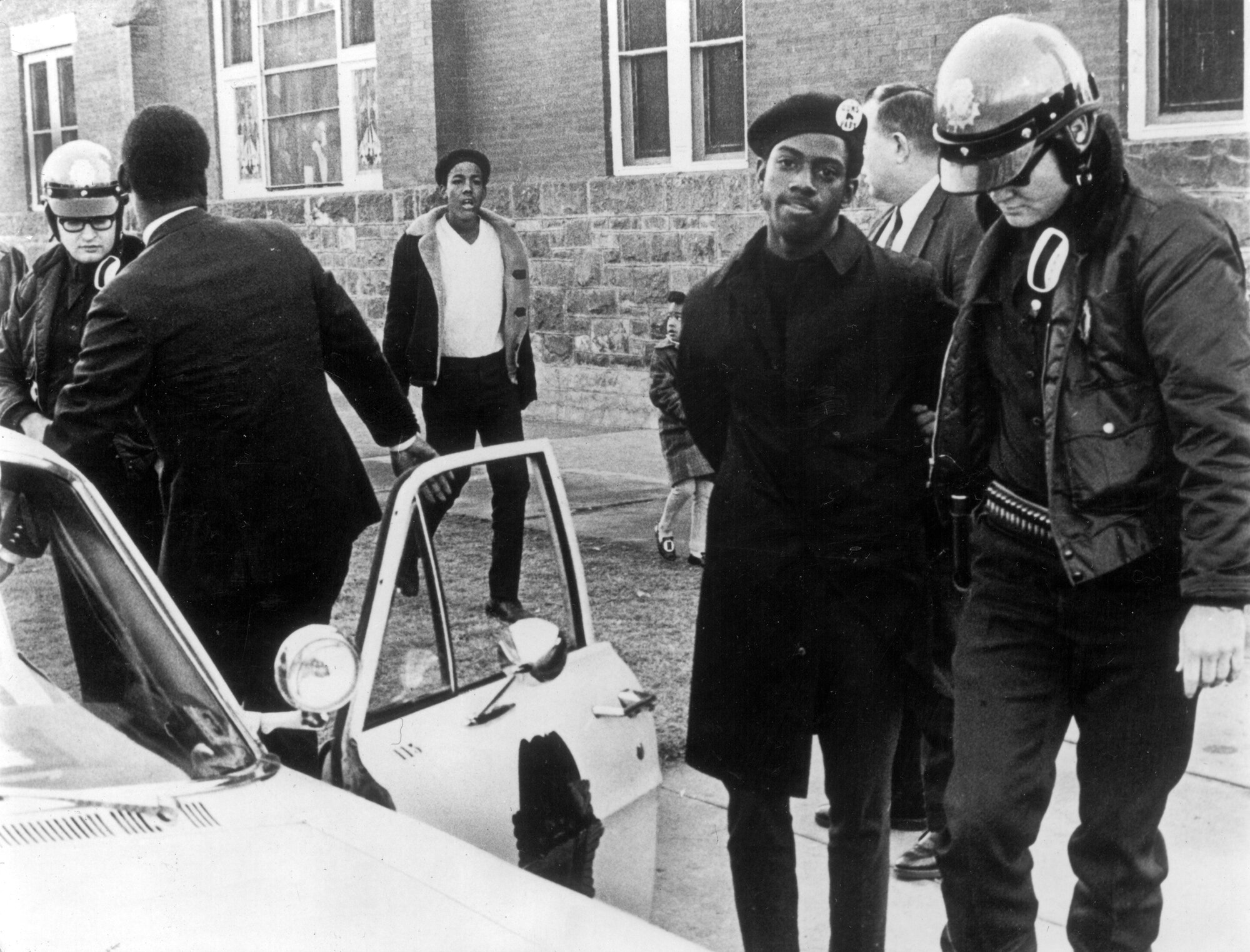
Black Panther Chauncey Booker being arrested at Cole Junior High School in Denver, Colorado in January 1969, on charges of “contributing to the delinquency of minors.”
Denver vs. Lauren Watson
Thirty miles to the southeast, in perhaps the most notable of these alleged incidents of harassment of Black Coloradans by police, the Denver Police Department arrested Denver Black Panther Party Minister of Defense and chapter founder Lauren Watson. On November 6, 1968, a Black student organization at Colorado State University invited Watson to speak. Before Watson left for Fort Collins, a Denver Police Department patrol car passed the Denver Black Panther Party Headquarters on 3401 Franklin Street in North Denver and a police officer, according to trial reports, “shouted something that sounded like ‘White Power.’” Patrol cars then blocked Watson’s driveway while he and fellow Panthers attempted to leave, trailing him after the car made it onto the street, and pulling him over a number of times. They eventually beat Watson after he dropped his keys on the ground at the final traffic stop. In an interview with the CU Afro-American Student Association newsletter Sounds of Blackness, Watson explained that the Denver Police, following this beating, arrested him on “eleven trumped up charges” including speeding, failing to yield for an emergency vehicle, and possession of dangerous drugs—none of which, to him, seemed legitimate. After booking Watson, the police released him, which Watson assumed was due to insufficient evidence for his traffic arrest and other charges.
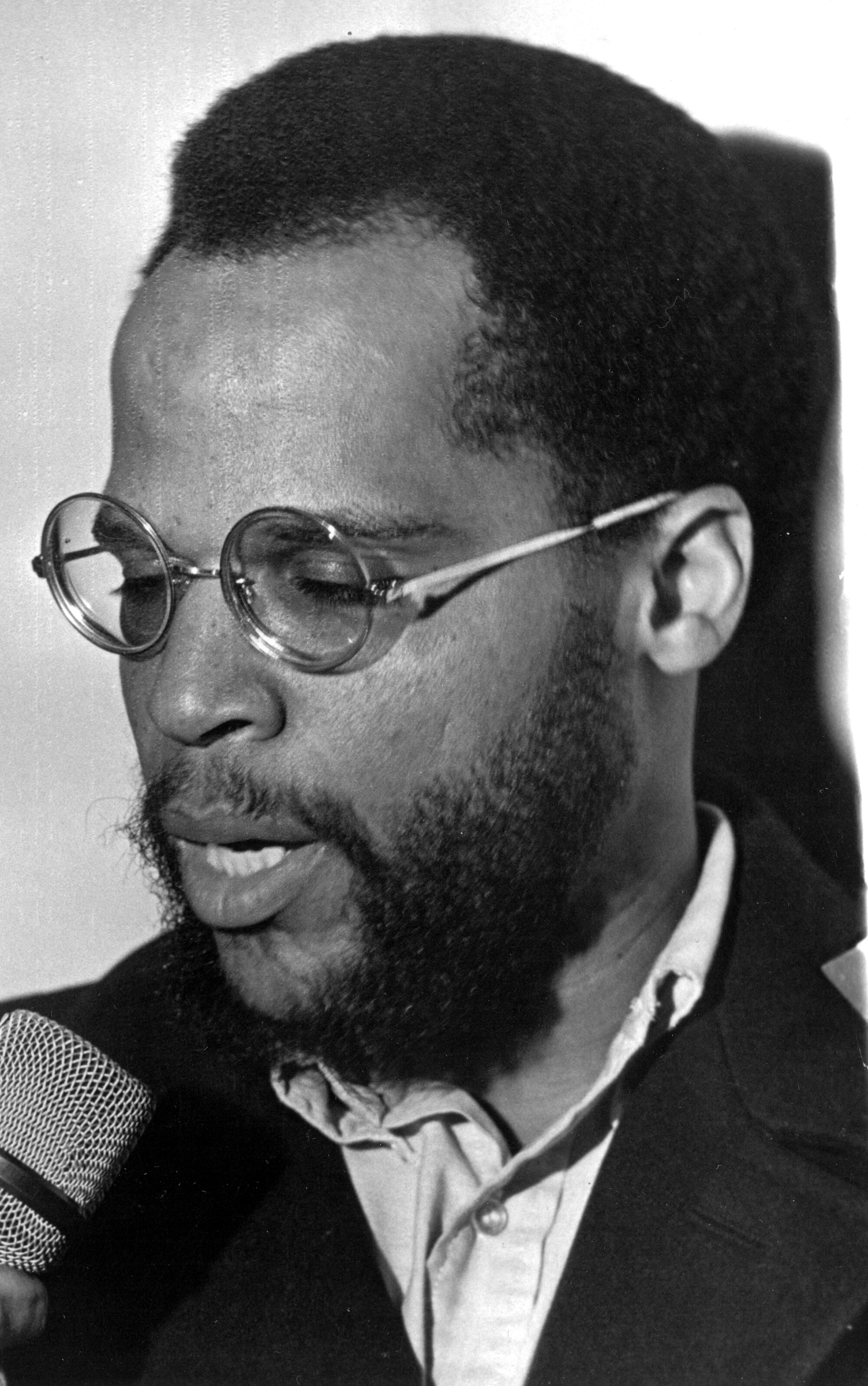
Watson being interviewed on March 6, 1969, likely by the Rocky Mountain News.
This treatment, according to Watson, fit a pattern from Denver Police. For weeks, officers had been paying heightened attention to the Black Panthers. According to Watson, this campaign kicked off because of his participation in a September 12, 1968, protest against a white-owned Five Points-area drycleaner. The owner of the business threatened an eight-year-old Black boy on his way home from school, before throwing cleaning liquid over the boy. In response, Watson, other Denver Panthers, and members of the Five Points community protested, leading to a corresponding police response. Watson was arrested, further reinforcing the pervasive belief that the Denver Police were targeting and harassing the predominantly Black community in Denver’s Five Points neighborhood. Following this, in early October, an eyewitness reported that “a police patrol car fired into the windows of the Panther Headquarters.” Other alleged incidents included shining flashlights into the building and the use of blank, pre-signed warrants.
The Black Panther Party had emerged from the social, racial, and educational mélange of California’s East Bay in the mid-to-late 1960s, formally organizing in 1966. Chapters soon developed across the country and gained both popularity and media scrutiny, including in Denver under the direction of Watson. The Panthers represented a radical, separatist arm of the Black Freedom struggle that focused on self-defense and stood in stark contrast to the more accommodationist stance of organizations like Martin Luther King Jr.’s Southern Christian Leadership Conference (SCLC). As the Black Panther Party’s Ten Point Plan—a founding document for the Panthers that outlined their goals, some of which included Black freedom, full employment, an exemption for African Americans from the military draft, and an end to police brutality—makes evident, the organization’s mission focused at least as much on community development and social support instead of the media and law enforcement caricatures of gun-toting violent Black radicals.
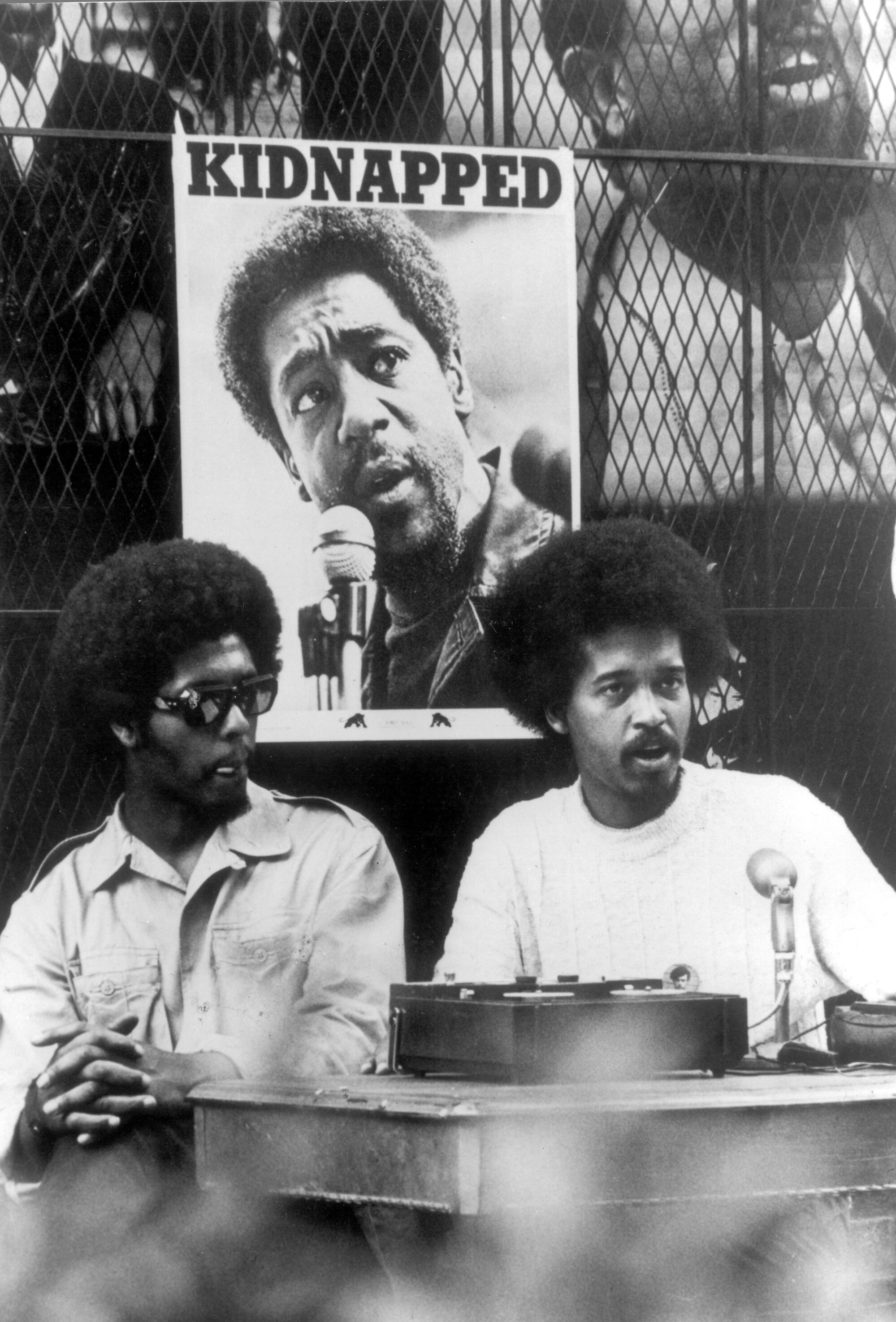
Two members of the Black Panthers speaking in an interview in Denver, around 1972.
Even though he was released, Watson’s arrest in November 1968 made its way to the Denver City and County judicial system two years later as the police pressed charges alleging that Watson had resisted and interfered with a police officer. In a television first, the NET Division of the public Educational Broadcast Corporation aired Watson’s 1970 trial nationwide in a six-hour documentary special entitled Trial: The City and County of Denver vs. Lauren R. Watson. Little remembered today, Trial offered viewers a lens into the American legal system in an era well before true-crime podcasts. A jury of six Denverites ultimately acquitted Watson, supporting his claims that the Denver Police had unjustly harassed him during his arrest on November 6, 1968. In the closing scenes of Trial, after being told of his acquittal, Watson claims, “I was more and more angry at myself for, you know, not beating the s--t out of him in the first place. I should’ve resisted arrest. I should’ve killed both of them when they came in the door. And that would’ve been justice, to me.” Watson was probably more radical than most, but his statement suggests the degree to which some Black Coloradans felt the conventional justice system let them down and discriminated against them because of their race, even when that system ostensibly worked for them.
Learning from Watson
Following his November arrest, Watson sat down for an interview with Charles Wartts, Jr., the editor-in-chief of Sounds of Blackness, a leader in the Afro-American Student Association, and a contemporary at CU of Carol Cunningham. Wartts wrote a report of Watson’s experience with the Denver Police Department that November day. Nearer to contemporaneous than his trial from eighteen months after the harassment, this article, entitled “Black Panther Loren [sic] Watson: When the Pigs Riot,” offers a closer look at Watson’s ideas in the immediate aftermath of his arrest rather than the judicial machinations seen in Trial. Wartts makes his position on Watson and radical Black politics clear by concluding his article with “we hail the Panthers!” Outside of Wartts, other Boulder community members supported Watson and the Denver Black Panther Party during this alleged harassment campaign. Reverend Wally Toevs, a Presbyterian Minister and future Boulder City Councilman, wrote in the Boulder campus newspaper, the Colorado Daily, two weeks after the Panther leader’s arrest that “those who share my concern that Watson and other black militants receive equal protection under the law may wish to join me in contributing to the Black Panther Community Defense Fund.”
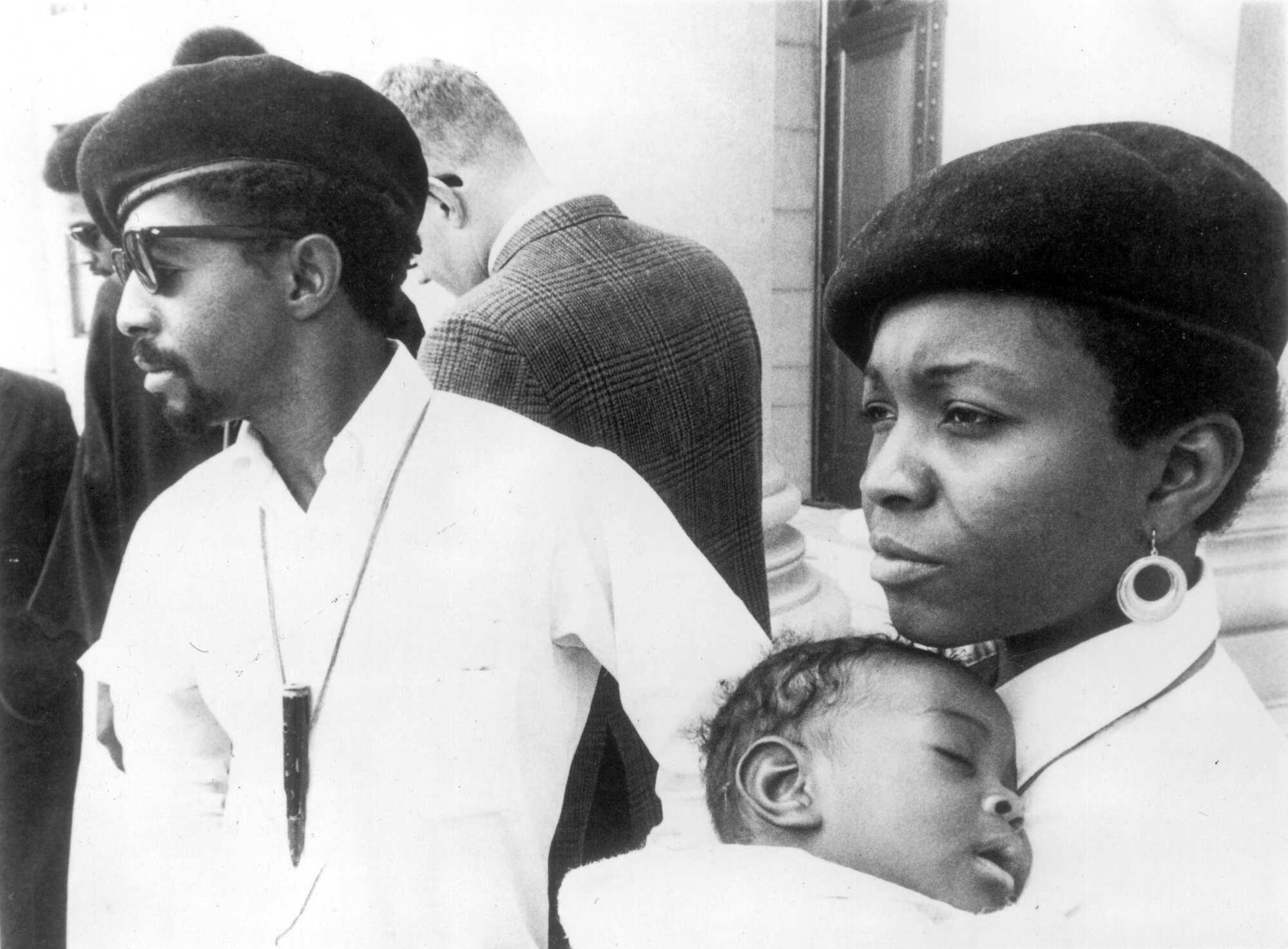
Mr. and Mrs. Sullivan, both members of the Black Panther Party, in uniform with their young child.
Wartts had previously seen Watson speak and was seemingly immersed in the radical Black political scene that emerged in the Denver metro area during the late 1960s. According to Wartts, Watson carried a certain air, and he remembered him “as a powerful brother—not so much in stature and appearance, or even in manner—but power in the sense of the response that he appeared to stir in those who listened to him.” Wartts, and other students involved in the Afro-American Student Association, clearly saw Watson not as an embodiment of the racial violence and radicalism that the American press used to define the Panthers, but instead as a highly knowledgeable and effective leader of a movement for Black freedom.
Wartts produced much of the content in that issue of Sounds of Blackness. He reported his interview with Watson, wrote an editorial commenting on the rise of Nixon to the presidency following the 1968 election the previous month, and an article that impassionedly defended CU Boulder’s chapter of Students for a Democratic Society, which had been pushed off campus and forcibly disbanded after a protest of an on-campus CIA hiring event in 1967. Although the University’s archived materials about this moment of Black activism on campus are unfortunately limited, it is clear that Wartts played a signal role in the development of a small, but potent, radical Black political scene at CU in the late 1960s. For this cadre of Black radicals, Watson—and the Panthers as a whole—offered a path beyond what they viewed as the staid Civil Rights Movement of the SCLC that, for many young Black activists, died alongside King. The failures in achieving Black economic equality, the nihilism of the Vietnam War, and King’s assassination all combined to make Watson a particularly compelling messenger.
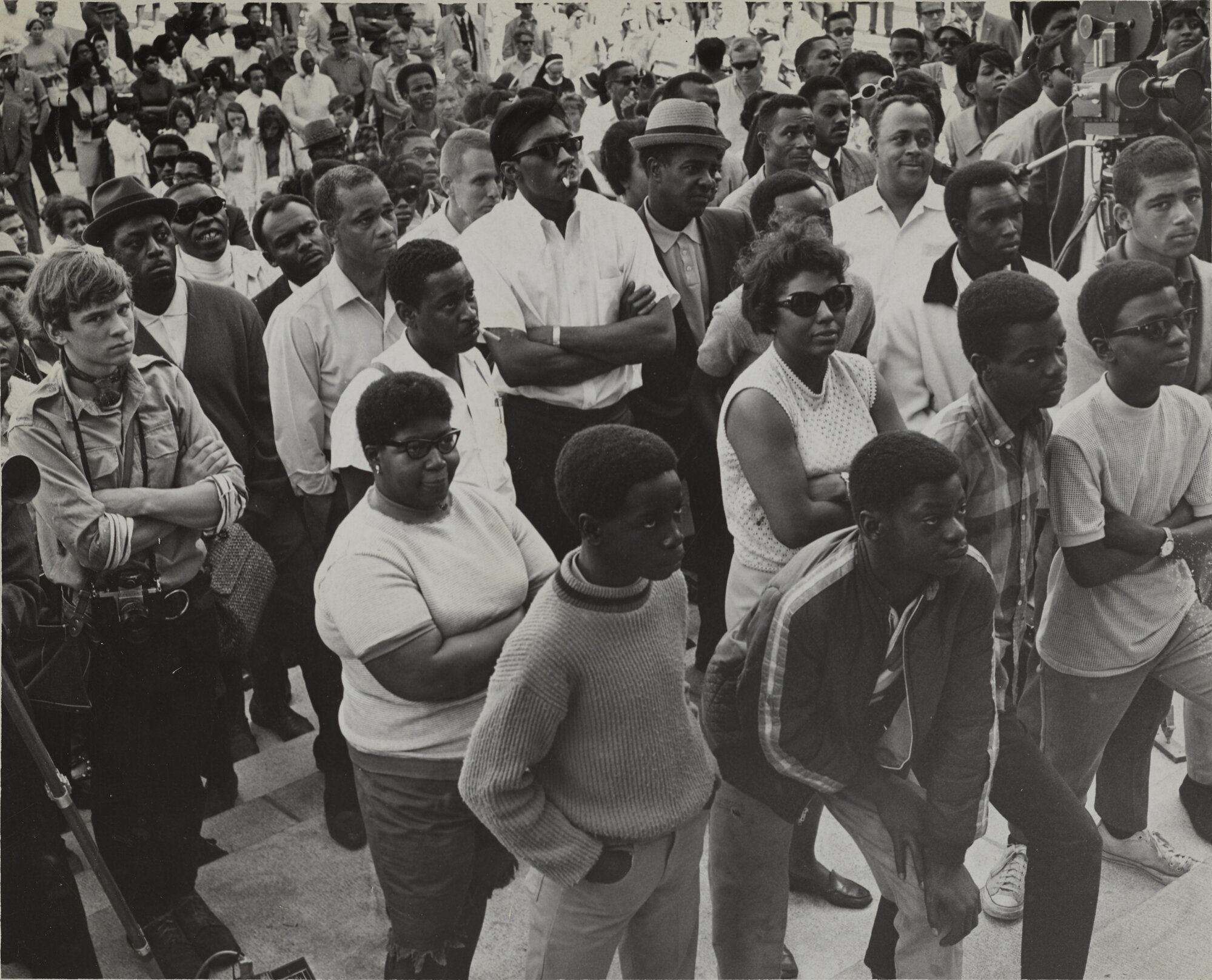
A crowd of protestors gathered outside the State Capitol following a police shooting in Denver. The student speaking to the crowd called for independent investigations into police activity and for a removal of white police officers from patrols in Black neighborhoods. Photo taken for the Rocky Mountain News, 25 June 1968.
Officers unjustly arrested Lauren Watson after a series of traffic stops. A separate pair of police officers allegedly beat Carol Cunningham and a friend on their way home in Boulder. Campus cops were called on a group of Black students making noise on a Saturday night. Though independent incidents, these moments of harassment and discrimination suggest how national shifts in the Civil Rights Movement of the 1960s and ’70s swept through Colorado. Taken together, they show us how some Black Coloradans experienced these shifts on the ground.
Yet, alongside this harassment, Black Coloradans simultaneously experienced real gains in equality under the law and in educational opportunity. Black students enrolled at state universities with greater confidence and institutional support through the BEP and similar programs at CSU, which helped to improve the higher education experience for a growing cohort of Black undergraduates. And significantly, a Black Panther won a criminal case with an all-white jury.
These contradictions—the concurrent dissatisfactions and successes of Black Coloradans—seem to emerge, in part, out of how the legal revolution of the Civil Rights Movement was experienced on the ground in some Colorado communities. The integration that followed the Civil Rights Movement, based on these accounts, often reinforced discriminatory attitudes, which might have prompted these irregular police interactions. Equality under the law was achieved for Black Coloradans by the late 1960s after decades of struggle by activists at local, state, and national levels. This legal change undoubtedly improved Black life in the state, but the fight for social equality outside of the legal world only entered a new phase. Black resilience and Black resistance was, and remains, a necessary part of achieving the on-the-ground gains envisioned by Wartts, Watson, Cunningham, and the host of unnamed Black Coloradan activists who sought to make the promise of legal reforms a reality.